Differences between Thermoset Coils, Thermoplastic Coils, and Hydraulic Coils
Thermoset coils, thermoplastic coils, and are three common types of electromagnetic coils. The key differences lie in material types, application scenarios, and performance characteristics. Below is a detailed comparison of their structure, performance, manufacturing processes, and applicable fields.
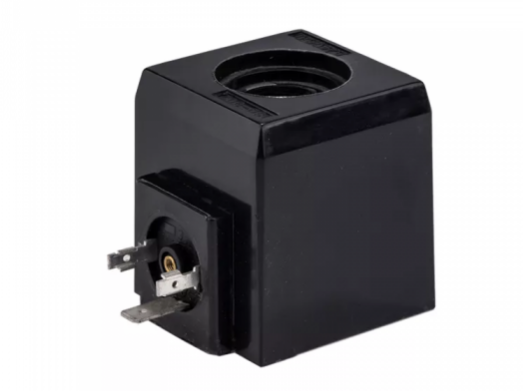
1. Concepts and Definitions
Type | Definition |
Thermoset Coil | The coil housing is made of thermoset materials (e.g., epoxy, phenolic resin), which cannot be reshaped once cured. |
Thermoplastic Coil | The coil housing is made of thermoplastic materials (e.g., PA66, PBT), which can be repeatedly heated and reshaped. |
Hydraulic Coil | Specifically designed for hydraulic system solenoid valves, with features like high pressure resistance, oil resistance, and corrosion resistance. |
2. Material Differences
Coil Type | Main Material | Characteristics |
Thermoset Coil | Epoxy resin, phenolic resin, DMC, BMC | High heat resistance, chemical resistance, and dimensional stability, but low toughness. |
Thermoplastic Coil | PA66, PBT, PC, PEEK | High toughness, easy to process, suitable for mass production. |
Hydraulic Coil | Typically thermoplastic housing with special sealing treatment | Excellent high-temperature, high-pressure, oil, and water resistance. |
3. Performance Comparison
Performance Indicator | Thermoset Coil | Thermoplastic Coil | Hydraulic Coil |
Heat Resistance | ✅ Excellent (200°C and above) | ❌ Good (100°C to 150°C) | ✅ Excellent (suitable for high-temp environments) |
Corrosion Resistance | ✅ Excellent | ❌ Moderate | ✅ Excellent (suitable for oil and corrosive environments) |
Water Resistance | ✅ Excellent (can achieve IP67) | ✅ Good, but requires additional sealing | ✅ Excellent (designed for harsh environments) |
Mechanical Strength | ❌ Low toughness, prone to cracking | ✅ High toughness, good impact resistance | ✅ High strength, suitable for high-pressure systems |
Processing Complexity | High, requires precise molding | Low, suitable for injection molding | Medium, requires specialized sealing processes |
Oil Resistance | Moderate | Moderate, requires additional sealing | ✅ Excellent (long-term oil contact) |
Cost | Medium | ✅ Low, suitable for mass production | ❌ High, specialized for hydraulic systems |
4. Processing Method Comparison
Processing Type | Thermoset Coil | Thermoplastic Coil | Hydraulic Coil |
Molding Method | Compression molding, casting | Injection molding, extrusion | Injection molding + sealing treatment |
Sealing Method | Epoxy resin potting, fully sealed | Partial sealing with O-rings or gaskets | Typically uses epoxy potting or sealing adhesives |
Repairability | Non-repairable after curing | Repairable through welding, cutting, reshaping | Typically does not require repairs |
5. Application Scenarios
Application Field | Thermoset Coil | Thermoplastic Coil | Hydraulic Coil |
Automotive | Engine control systems, brake systems | Dashboard, electric windows | Transmission control valves, power steering systems |
Industrial Automation | High-temperature environments, chemical equipment | General solenoid valves, pneumatic equipment | Hydraulic systems, hydraulic solenoid valves |
Outdoor Equipment | Power equipment, outdoor control boxes | Photovoltaic systems, outdoor solenoid valves | Hydraulic lifts, oil control valves |
Hydraulic Equipment | Rarely used | Rarely used | ✅ Widely used in hydraulic systems |
6. Advantages and Disadvantages Summary
Coil Type | Advantages | Disadvantages |
Thermoset Coil | High heat resistance, chemical resistance, excellent dimensional stability | Low toughness, complex processing, non-repairable |
Thermoplastic Coil | Low cost, flexible processing, high toughness | Lower heat and chemical resistance compared to thermoset materials |
Hydraulic Coil | High pressure resistance, oil resistance, excellent waterproofing | High cost, complex sealing requirements |
7. How to Choose the Right Coil Type?
Application Requirement | Recommended Coil Type | Reason |
High-temperature environments (above 150°C) | Thermoset Coil | Excellent heat resistance, suitable for harsh environments |
Mass production and low cost | Thermoplastic Coil | Easy to process, suitable for quick production |
Hydraulic systems (high pressure, oil resistance) | Hydraulic Coil | Excellent oil and pressure resistance, designed for hydraulic systems |
Outdoor or humid environments | Thermoset Coil / Hydraulic Coil | Both can achieve IP67 waterproof protection |
8. Conclusion
- Thermoset Coils are suitable for high-temperature and chemical-resistant environments, but their processing is complex and non-repairable.
- Thermoplastic Coils are suitable for mass production and general industrial applications due to their low cost and high toughness.
- Hydraulic Coils are specifically designed for hydraulic systems, with high pressure, oil, and water resistance, making them the preferred choice for hydraulic valves.


评论
发表评论