Air Compressor Automatic Drain Valve: An All-Inclusive Guide
Whenever we discuss compressed air, water and condensate management must also be considered. A conversation about compressed air would be incomplete without addressing the importance of a drain valve to ensure clean, dry air. Moisture condensation cannot be overlooked, as it directly affects system performance.
In this article, we will cover everything you need to know about automatic drain valves for air compressors and address frequently asked questions related to them.
What Is an Automatic Tank Drain Valve?
An automatic drain valve is designed to remove a mixture of compressor lubricants and water from compressed air systems.
Having a fully-functional drain valve is crucial as it helps prevent unnecessary maintenance and eliminates the need for manual removal of liquid from the air compressor.
Various types of drain valves are available to assist in drying storage tanks, including Solenoid Electric Drains, Motorized Time Ball Valves, Pneumatic Zero Loss Drains, and more.
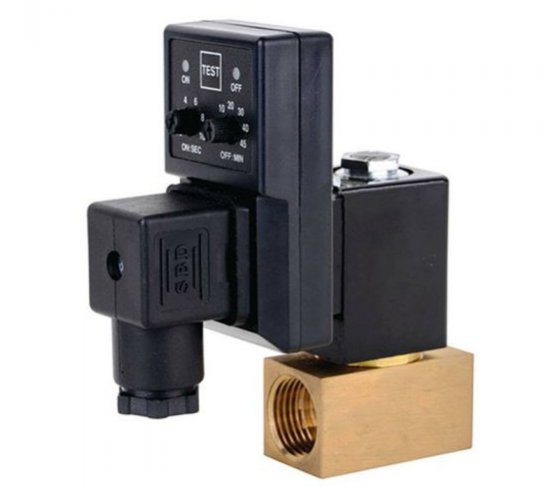
How Does an Automatic Drain Valve Work on an Air Compressor?
An automatic drain valve operates by directing the condensate into the valve’s condensation reservoir.
As the liquid level in the reservoir rises, it lifts the float off its seat, triggering a control air pressure signal to the pneumatic piston, which opens the ¾ ported ball valve.
Similarly, motorized automatic drain valves can be connected to lower and upper liquid level sensors, enabling them to function as zero-loss drain valves.
Automatic Drain Valve vs. Manual Drain Valve: What’s the Difference?
Before exploring the differences, it’s important to note that most air compressors come equipped with a manual drain valve, typically located at the lowest point of the air tank.
When the pump compresses air, moisture is generated and carried into the tank, settling at the bottom. As a result, the drain valve is positioned there. A manual drain valve must be opened at least once daily to remove the water.
If this step is neglected, water can accumulate in the receiver, potentially storing gallons of water over time. Unfortunately, this daily task is often overlooked, leading to a range of problems.
To address these issues, automatic drain valves were introduced.
For industrial air compressors, automatic drain valves are essential. They automatically drain the water after each use, ensuring the tank remains dry and preventing corrosion.
Auto Drain Valve – What to Consider When Purchasing?
When buying an air compressor automatic drain valve, there are several factors to consider.
First, it’s crucial to select the right thread type to ensure your drain valve connects easily with your air compressor. A ½” male NPT inlet is compatible with most air compressors. If necessary, you can use a reducer to ensure proper fit.
Next, consider the discharge time and internal time of the auto drain valve.
The discharge time determines how long the valve stays open, while the internal time dictates how often the valve opens. Ideally, look for a discharge time between 0.5 and 10 seconds, and an internal time between 30 and 45 seconds.
It’s also important to ensure that the auto drain valve can operate at the same pressure level as your air compressor’s maximum pressure. A valve rated for pressures above 200 PSI is recommended.
Finally, choose a durable body material for the auto drain valve. We highly recommend brass, as it can withstand high pressures and temperatures, is resistant to corrosion, and offers long-lasting performance.


评论
发表评论